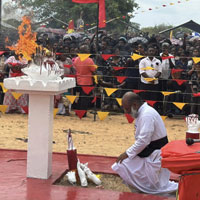
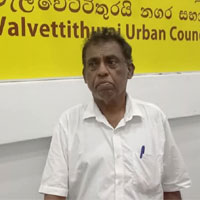
The 407th death anniversary of King Cankili (Sankiliyan), who ruled the Jaffna Kingdom, was commemorated yesterday (06).
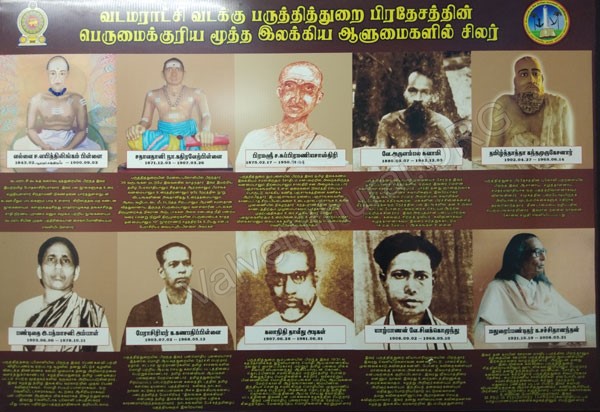
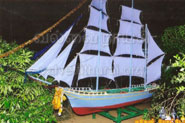
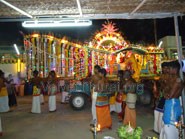
A floral tribute ceremony was held at the King Cankili statue located at Muththirai Junction, Nallur, in Jaffna. A historical exhibition highlighting the king's life and legacy was also organized as part of the commemoration.
The event was conducted under the leadership of Sivathondar Sreenthiran, Secretary of the King Cankili Foundation.
The Fearless Legacy of King Cankili I: The Tamil Monarch Who Defied Colonial Empire
The historical narrative of Sri Lankan Tamil sovereignty is incomplete without the towering figure of King Cankili I (also known as Segarasasekaram). Ascending the throne of the Jaffna Kingdom in 1519, his reign marked the dawn of fierce native resistance against European colonialism. At a time when Western powers were dismantling kingdoms across Asia, Cankili I stood as a formidable barrier against the expansionist ambitions of the Portuguese Empire.
A Kingdom at the Crossroads of Colonization
When Cankili I took the reins of the Aryacakravarti dynasty from his capital in Nallur, the geopolitical landscape of the island was fracturing. The Portuguese, having firmly established a presence in the southwestern coastal regions, were turning their sights northward. They sought not only the lucrative pearl fisheries of the Gulf of Mannar but also a foothold to control regional trade routes and aggressively enforce religious conversions.
Recognizing the existential threat to his kingdom's sovereignty, culture, and economic independence, Cankili I adopted a policy of absolute non-compromise toward the European invaders.
Relentless Defiance and the Mannar Expedition
King Cankili’s resistance was both strategic and uncompromising. He viewed the local conversions orchestrated by Portuguese missionaries not merely as a religious shift, but as a political tool used by Goa to foster internal subversion and seize local trade assets.
In 1544, when Portuguese-backed factions attempted to take over the highly profitable pearl fisheries off Mannar Island by weaponizing localized conversions, Cankili I launched a swift military expedition. He reclaimed the territory and neutralized the colonial outpost—an act that sent shockwaves all the way to Lisbon. The Portuguese Crown viewed this defense of territorial integrity as a direct affront, setting the stage for decades of military confrontations.
A Linchpin of Regional Resistance
Beyond his own borders, Cankili I understood that defeating a global empire required regional solidarity. Under his rule, the Jaffna Kingdom became:
The Logistical Hub for Kandy
He positioned Jaffna as a vital entry point for military aid, supplies, and mercenaries arriving from South India (including ties with the Kunjali Marakkars and the Nayaks of Tanjore) to support the interior Kingdom of Kandy in its fight against the Portuguese.
A Heavily Fortified Frontier
He fortified Nallur with stone bastions and heavy artillery, turning the northern capital into a fortress capable of repelling massive naval armadas.
The 1560 Invasion and the People's Rebellion
The inevitable clash came in October 1560, when the Portuguese Viceroy Dom Constantino de Bragança led a massive armada of over 100 ships and thousands of soldiers to crush Jaffna. After intense fighting, the superior firepower of the Portuguese artillery forced Cankili I to temporarily retreat to the Vanni interior.
Showing astute diplomatic acumen, Cankili feigned a peace pact to buy time. Once the Portuguese forces relaxed their guard inside Nallur, the King incited a massive, coordinated peoples' rebellion. Taken by surprise by the fierce local uprising, the occupying Portuguese forces suffered heavy casualties and were forced to completely evacuate the capital.
An Enduring Symbol of Sovereignty
Though internal palace politics and subsequent invasions eventually altered the trajectory of the kingdom by the mid-1560s, Cankili I successfully preserved the independent existence of the Tamil kingdom during his lifetime.
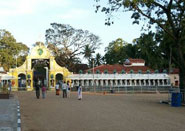
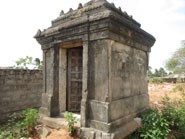
Today, landmarks like the Cankili Thoppu facade in Nallur and his golden statue stand as physical reminders of his rule. For global readers and historians alike, King Cankili I remains an enduring symbol of anti-colonial resistance, indigenous sovereignty, and the unyielding spirit of the Jaffna Kingdom.
Comments will be edited (grammar, spelling and slang) and authorized at the discretion of Valvettithurai.org. The website also has the right not to publish selected comments.
Reproduction of our any news item is allowed when used without any alterations to the contents and the source, Valvettithurai.org, is mentioned.